
Author Archive

5 Wild Ways Your Bad Habits Affect Your Life

Posted November 2, 2017 By Frank Strona

Bad Habit.. Who Me?

Everyone has a bad habit or two (maybe more). Maybe it’s a mundane bad habit like nail-biting, pen clicking, hogging the remote, or foot tapping. Or maybe it’s a bad habit that affects your life a little more, like non-stop snacking, hogging personal space or talking space in meetings,  procrastinating, or overspending. Some bad habits cause short-term harm to people’s health and relationships. Other habits can cause long-lasting pain and suffering in ways that most people who do them have never imagined possible. Some can even get you fired, or worse, not even get you hired in the first place. Take a few minutes to look at 5 of the more common ones many of us share and some thoughts on how to “break” them.

Repetitive Gum Chewing

  • Chewing gum every now and then is perfectly fine, but for those who chew gum daily or even multiple times a day, it can cause problems for their health. Chewing gum too frequently can force teeth out of a healthy position, tighten and strain chewing muscles, and dislodge fillings. It can lead to nighttime teeth grinding and jaw clenching. Over time, all of these can wear out your jaw joints, which puts pressure on your nerves and causes joint and ear pain.
  • Beyond your dental health, chewing gum may affect your diet, causing you to eat more junk food and less fruit. It can also lead to gastrointestinal problems like irritable bowel syndrome. All of these can impact your life detrimentally. Not only will you probably irritate your coworkers because you’re constantly chewing gum, but jaw pain and gastrointestinal issues can affect your productivity.
  • Gum chewing in the workplace is also a common “top 10 pet peeves” among people who share offices or work in cubes.

My Hint: Chew less or at least chew smaller pieces. Over time you may find that splitting that stick into thirds, will fill the urge to chew, but isn’t such a mouthful.

Constant Daydreaming

  • Fantasizing is a normal human behavior. Pretty much everyone does it occasionally. However, habitual daydreaming (also known as maladaptive daydreaming) can disrupt every part of your life. Many people who daydream like this do it to escape the pain of real-world troubles like extreme debt, job loss, suicidal feelings and debilitation from medical conditions.
  • Fantasy worlds can take over your life so much that you lose track of time, stop cultivating relationships, decrease positive personal care habits like bathing and eating and pace uncontrollably. If can even cause mental and physical exhaustion as well as joint and muscle pain. The more these fantasy worlds invade your thoughts, the less you focus on the real world, which can lead to lost friendships and, even worse, lost jobs. Employers don’t like employees who can’t focus or constantly arrive late.
  • Seems that for some this is just a “mental break” taken to get through the day, but for others, it is a condition that can be explored with understanding how you sleep and or therapy.

My Hint: If you aren’t feeling challenged or feel your workplace is lacking in some creative time in your career – speak with your leads to explore ways to spark your creative process. Otherwise – take control and do it on your own. Sign up for a class, a book club or some other activity that may ignite your brain into a more creative mood.

Ignoring Medication Warnings

  • Many people ignore label warnings on prescription and over-the-counter medications (Yup, I will own that – I am bad that way).
  • Even many common drugs can cause horrifying side effects when used improperly. For example, if you take too much acetaminophen, you can black out or experience severe liver inflammation and/or damage. The same can happen if you drink too much alcohol or come down with infectious mononucleosis while taking acetaminophen. Other drugs can increase the risk of sunburns or heat exhaustion, or cause rashes and even strokes in high temperatures and with direct sunlight exposures. Even just getting drowsy at work can be problematic; imagine blacking out because you didn’t know the side effects of your medication. You should never just pop pills. Always read the labels.

My Hint: Ask your Pharmacist; they often can tell you right in the moment if what you are taking can be a problem with other medications or if it has known warnings.

Distracted & Drunk Driving

  • Maybe you’ve got a habit of texting while driving because you just have to be in-the-know at all times. Did you know that texting while driving makes you as impaired as you’d be if you’d drunk four beers and gotten behind the wheel? Texting while driving can be even more dangerous than drunk driving. No matter which one you have a habit of—texting while driving or drunk driving—any type of distraction while driving could destroy your life. Not only can it ruin friendships, but you could also find it much harder to get a job if you have a criminal record.
  • All it takes is looking away from the road for a second for a child to run out in the street or to swerve into an oncoming lane of traffic. If you accidentally injure or even kill someone, you’ll end up facing criminal charges, and even if you don’t end up in jail or prison, you could still end up with community service, fines, or a lawsuit for punitive damages.

My Hint: Just stop. You aren’t better than everyone else at multitasking while driving. This is one of those “you know it’s going to get you in trouble eventually – so what not correct it now before you or someone you love gets hurt.”

Smoking Around Non-Smokers

  • It’s well-known that smoking is unhealthy, but that doesn’t stop millions of people from doing it. The problem comes when those smokers don’t think about how their habit affects those around them. It’s not just your own health you’re damaging. Breathing in the smoke secondhand can damage the health of non-smokers as well. Tobacco smoke contains thousands of chemicals that can cause health problems from heart disease to cancer. Smoking even just once in a non-smoker’s home can potentially harm their health immediately via the smoke or over time through ash dust.
  • Even if you respect your non-smoking acquaintances and only smoke in designated smoking areas, smoke still travels and it stays on your clothes. The people around you can still breathe in those chemicals just from being near you after you’ve smoked. The more you smoke, the more you risk negatively affecting your relationships with non-smokers, because they won’t want their health compromised from your bad habit.
  • Lots of alternatives exist these days to move towards being smoke-free. They should; the “stop smoking” industry is almost as well funded as the tobacco companies themselves. So look towards your local healthcare provider, social service organizations, your health insurance company website or visit SmokeFree.gov for other ideas.


Having one or more of these habits could have a strong affect in your life in ways you might not even register until they become a problem. It’s time to consider which is the best way to dump or at least minimize them. Improve your life and the lives of those you interact with daily. Remember, January is right around the corner – wouldn’t it be cool to move into the new year with some healthy resolutions already practiced and in place?
SaveSaveSaveSave

SaveSave

SaveSave

SaveSave

Talking about Mentoring LGBTs in Tech at Tech Inclusion

Posted October 30, 2017 By Frank Strona

Talking about Mentoring LGBTs in Tech at Tech Inclusion

As I posted earlier this week on the latest post of my food and culture blog BiteTheRoad.com, I had a super busy few weeks. One of the highlights was surely the 10 min “TED” style talk on Mentoring LGBTs that incorporated storytelling as a way to share about the importance of mentorships and mentors for the LGBT person in Tech. It was a great afternoon with so many very cool people present. I had forgotten how I enjoy the process of planning using the storytelling technique and coaching through humor. The best part for me personally was the moment I reminded myself – that this was what I loved doing. Showing and modeling how the power and importance that comes with taking to a platform or stage and storytelling, not only the “wins”. Those are often the easy parts, but also sharing about the hard stuff, the almost and most definitely the big “fails” we all go through. After the talk, several folks took the time to let me know how they appreciated my candor and honesty, about the power that ignoring an opportunity because of fear, labels or difference of beliefs or race can raise. So TechInclusion was a personal win for me!


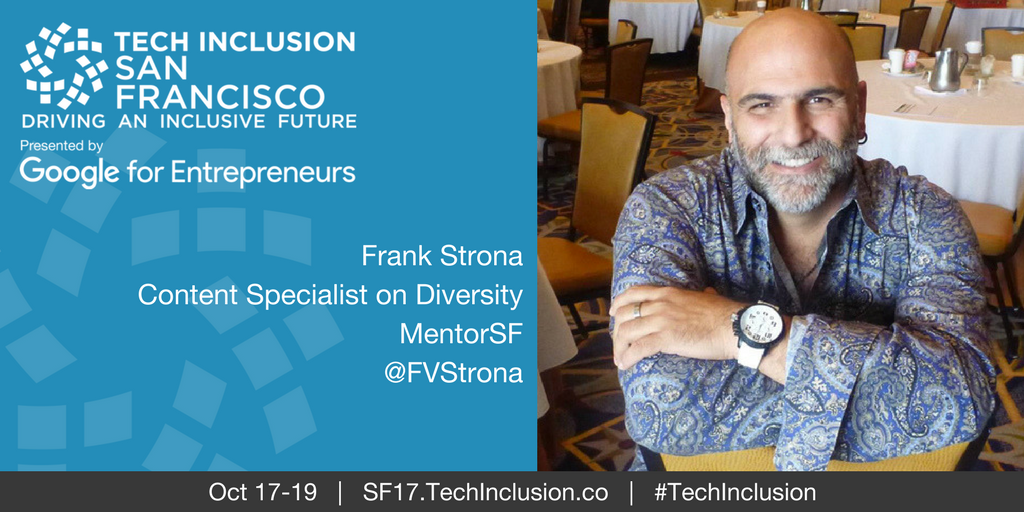
It was also fun to be back in the San Francisco Armory in this other role, as I always enjoyed it from my other one. As a venue – they do a great job of hosting programs. one of the folks snapped a picture of me in motion and I dressed it up a bit and shared with my social media hubs as well.

Below is the video of my presentation session and under that the slide set.


SaveSave

SaveSave

SaveSave

SaveSave

SaveSave

SaveSave

SaveSave

Holiday campaign planning – done your 2018 plan yet?

Posted October 25, 2017 By Frank Strona

From David Fowler’s ’Tis The Season: 11 Email Best Practices For Holiday Campaigns List

Holiday campaigns, really? already?

Now really – I know, it barely October and at least here in San Francisco, I can tell the New Year is months away, because, on October 1st, they already start slowly sliding in the holiday drama so that by the 15th, its a full out reminder that the winter holidays will be on us soon.

Many of you are already thinking, that means a “todo list” of performance plans to complete, vacation and the resulting scheduling of staff and more importantly the planning a holiday campaign. For non-profits and those seeking to bring in funds that capitalize on the end of year funds, donations and other key revenue streams having an end of the year or holiday campaign is crucial. Stuck wor ideas – this is a good time to check the blogs as many of your favorites will start publishing “best pick” types ones. On the Hubspot blog, in Lindsay Kolowich’s “12-minute read” recent post “15 Brilliant Examples of Holiday Marketing Campaigns“ offers some good ideas as a starting place to get your thinking going. Last year I posted about “promoting your content” and you can find that here.

David Fowler recently shared this post; ’Tis The Season: 11 Email Best Practices For Holiday Campaigns which suggest 11 of his “best practices” for your holiday campaign. It’s a good read for those of you thinking or who haven’t started thinking of your end of year promotion/campaign. From his list 5 of them stand out for me as the ones that always seem to catch people by surprise

My 5-holiday takeaways from Fowler’s “11 Email Best Practices For Holiday Campaigns” list:

  • Email list hygiene – This means that quarterly email lists (and snail mail address list) you keep meaning to do a review of – it really needs to get done. Doing in October with a planned completion of October 31 will leave this task prepped for the holiday campaign and bring you into the strategic planning for the next year with demographics that may shape your outreach.
  • Review current levels of engagement – This goes hand in hand with getting your list cleaned up. Now is the time to be brainstorming and networking to determine how you want your engagement to look next year. Take a critical, but kindly, look at what yours looked like this year. Include the wide landscape of your reach; Internal, external, influencers, missed opportunities and dig into that file of “maybe I shoulds”.
  • Link email campaigns with other digital marketing activities: This is my reminder to also expand your thinking about partnerships and storytelling as a way to expand your reach, brand and develop new opportunities both digitally and in real time. By linking and cross promoting other peoples efforts, you build cross-over demand and inspire new followers. I know this is the perfect time to start thinking about interviews, podcasts, and other marketing tools that encourage interactivity and reach. Or develop a “free” digital “something” and offer it to key select partners to offer via the platforms that promote as a holiday extra and negotiate the tracking and sharing of the downloads.
  • Ensure networks can handle increases in email traffic: Yeah – this not the time to get skimpy with your tech needs. Not a good time to roll out any new functionality that is temperamental. Do some forecasting with your tech team. If you are the “teach team”don’t use this time to make significant changes without backup. But at the same time – it’s a perfect time to check with your hosting services and other supplemental tools to ensure you can handle an increase in traffic or web hits. Oh and this also includes and subscription renewals you have pending – get them taken care of early. Also, try to get some forward reading in now on how to prepare or prevent your traffic gridlock.
  • Set realistic expectations and goals – much of the above all play into this one. Its good to aim hight for your goals – but maintaining your own “reality check” as to what is realistic is also important. When I work with small businesses and/or the individual business owner, this is the time I encourage them to take a three-prong new year planning approach and introduce time to brainstorm and journal the follow considerations; a) How will staying the same affect us,  b) what would big growth mean and c) what happens if we stumble.

For the full read of Fowler’s article, visit this post on the CMO.com opinions page


A few “good reads” From my Monday list

Posted October 24, 2017 By Frank Strona

A recap listing of what I read on Monday

  • LinkedIn has been the social network geared to professionals for years—but it’s growing in popularity due to its people-centric approach.

    ’Tis The Season: 11 Email Best Practices For Holiday Campaigns Because email lists and the infrastructure to process digital campaigns are the backbones of successful digital holiday campaigns, think of your No. 1 priority as checking email lists, and checking them twice. Here are some tips for things you can start doing today to help assure success this holiday season. [NOTE: I am posting about this later in the week]

  • 3 simple ways to stop a Twitter catastrophe In today’s world, customer service starts on Twitter. Instead of waiting on hold for 30 minutes, fighting with an automatic answering service and praying to speak to an actual person, millennials are turning to social media to air their grievances. It’s more efficient, but your brand is vulnerable. When you receive negative customer complaints on Twitter, your organization is pushed into the spotlight. How you respond can make all the difference.
  • Facebook Live adds its own screen-sharing feature When you want to share your screen to Facebook Live, you hit the button on the Live interface that says “Share Screen,” and you’ll be prompted to allow the extension to be installed to your browser. It worked with Chrome, but the option wasn’t available in Firefox. [Note: This makes me wonder how this will impact bandwidth in the workplace]
  • Why LinkedIn is a hot spot for communicators [See the Infographic on the right] LinkedIn has been the social network geared to professionals for years—but it’s growing in popularity due to its people-centric approach. A growing focus on personal branding, networking online and content sharing are just a few reasons that more users than ever (roughly 500 million) are using it. [Note: I am still not convinced about LinkedIn; I remain on the fence as to its usefulness and authenticity.. that is not to say I am not on it either. I just am not sure how much real networking ROI it adds to me professionally]
  • KFC Quietly Followed 11 Herbs and Spices on Twitter, Then Waited to See If Anyone Would Notice “We planted this on Twitter over a month ago,” said Freddie Powell, creative director at Wieden+Kennedy. “Frankly, we weren’t sure if anybody was going to find it. Sometimes you just have to put stuff out into the universe and cross your fingers that the internet will work its magic.” [Note: This was clever, I have to say — even I noticed this getting air-time and watching it happen]
  • An addict’s tale: My week without social media By Monday I’d deleted Instagram, Twitter, Snapchat, Facebook, Pinterest and LinkedIn applications off my phone and logged out of all accounts on my laptop: it had begun. Hi, my name is Inés and I’m a social media addict. But this week, I decided to go through digital detox by turning off all of my major distractions. [Note: I do this periodically and even used to assign a “weekend” version to students having them write by hand no less, an essay in class following the weekend]

SaveSave

7 Daily Investments to Help Relieve Stress

Posted October 23, 2017 By Frank Strona

People who are successful at managing stress have a method. If you’re sweating the small stuff in daily life, it’s important to learn ways to reduce stress before it transforms into a health issue or mood disorder down the road. Here are 5 stress soothers that you can incorporate every day:


Investments 1: Walking On Sunshine

A simple walk is easy to work into your day. You don’t need fancy equipment, it’s free, and it starts the minute you walk out the front door. According to Help Guide, a brisk walk for 20 minutes daily boosts the feel-good endorphins in your body, naturally improving mood and self-esteem while reducing stress and calming the nerves. You don’t need to pound the pavement – studies show that even a short, low-intensity stroll is effective. For added stress-reduction during your walk, practice a simple meditation technique with each step. Focus your attention on each footstep while counting “one, two, one, two” and visualize the number in your mind as you step. If you notice your thoughts drifting to something else, gently bring your mind back to counting your footsteps.


Investments 2: Hit the Pause Button

If you are feeling agitated, do not go any further. Take a break and continue working later. Reacting to a situation when you are already tightly wound only makes it worse. Take time for yourself before proceeding with other tasks. When you are feeling refreshed and clear headed again, go back to the issue at hand.


Investments 3: Breathe from Your Belly

There are many meditation techniques that you can work into your daily routine. One extremely pleasurable method is diaphragmatic breathing. Place one hand on your chest and the other on your belly. Breathe deeply while concentrating only on your breath and feel your belly expand. The hand on your chest will not move if done correctly. doTERRA recommends using frankincense oil to enhance your meditation routine. This type of breathing activates your parasympathetic nervous system.


Investments 4: Write a Journal or Blog

Banish any lingering thoughts from your mind by writing them down. It can be as simple as taking a page each day and writing down three positive things you are grateful for. Or, channel your creative voice into a blog with pictures to tell the world your story.  Our Storytelling Technology Bootcamp focuses specifically on the benefits of this practice and how the storytelling has become a movement. Putting down your thoughts and emotions gets it out of your system and often helps you find a solution. Sharing your ideas with others through a blog gives others new perspective as well.


Investments 5: Have a Good Night’s Sleep

Choose a predictable and calming sleep routine that you look forward to. Meditate, take a soothing bath, read, sip chamomile tea, or listen to soft music. Whatever it is, allow yourself the time to enjoy and move towards sleep. Adding to the quality of your sleep will add to your productivity during the day.


Investments 6: Make Time for Relationships

Cultural postmodernism has wreaked havoc on our ability and desire to participate in romance, but emotional intimacy remains a central pillar of the human experience, nonetheless. Research shows that pursuing and prioritizing relationships reduces stress, lengthens lifespan, increases happiness, and may even reduce the risk factors of addiction. A vigorous sex life has also been shown to reduce stress and improve emotional intimacy.


Investments 7: Invest in Yourself

One of the most common stressors occurs when we are spread between too many competing priorities. When we feel pulled in different directions, one of the first things to get cut from the routine is our self-care and personal improvement. It takes a lot of discipline, but try to carve out some time to invest in your own growth. Take a class, listen to a podcast, read a book. Sharpen yourself mentally, physically, and spiritually. More than anything else, this type of investment will trickle down into other areas of your life – increasing performance at work, strengthening your relationships, and producing emotional resilience necessary to tackle life’s many challenges and trials.


Stress is a part of daily life, but the good news is that you are in control. You should strive for an optimal level of stress – enough to coax you into growth behaviors, but not so much that it becomes crippling. In determining what an optimal and practical level of stress is, get a mentor who can help coach you through it. By incorporating these seven useful investments in yourself, you can reduce stress and experience new freedom and vitality. Have more to share? let us know! or tweet them and use the hashtag #MentorSFCA

SaveSave

SaveSaveSaveSave

SaveSave

SaveSave

SaveSaveSaveSave

SaveSave

This story posted on SocialMediaToday has some good content on the application of social media engagement and may be worth a read by folks. Originally posted on Top Dog Social Media, I can see why it was worth being reposted.

As with any marketing, most of agree “Understanding your customers is largely dependent on understanding how they think” but I would add so is an also understanding of what motivation they will need to act on what they think. Remember – feeling, thinking and acting is a proccess that one goes through and shoulld be part of the recipe for success. 

So when devloping your strategies – its good to expand your base questions:   What do your target customers need? What do they want? What can you do to influence their decision-making process? What is the win? What is gained by the “fail”? etc.

For the full story from visit SocialMediaToday (and I do recommend you take the 10 min to read it) can be found here .

But these are a few of my favorite highlights from the SocialMediaToday article:

“Social media engagement may come in the form of click-activated reactions (such as the Facebook like button), shares (retweets on Twitter, regrams on Instagram, and so on), and responses (comments on your LinkedIn status updates, for example).”

… the level of engagement tends to vary based on a number of factors which may or may not be within your control.

… not all of your updates are equally successful, and that some will generate more engagement than others.

The  7 rules of social media engagement

In his book ‘Influence: The Influence: The Psychology of Persuasion  of Persuasion‘, Robert Cialdini identifies seven key influencers of persuasion.

1) Weapons of Influence (Social Selling)

2) Reciprocity (Relationship Building)

3) Commitment and Consistency (Content Marketing)

4) Social Proof

5) Liking (Personal Branding and Storytelling)

6) Authority (Thought Leadership)

7) Scarcity

The story offers some social media engagement tactics that they suggest work

Updates that trigger an emotional response

Relevant questions for your target audience

A sense of humor

A contrarian point of view

Compelling storytelling

Newsworthy content and updates

A consistent presence

Having a healthy mix of content topics and formats

Include a call-to-action

As well as some of the more common social media engagement faux pas

Posting a certain kind of update on an ill-suited platform

Sharing without adding a personal touch

Asking a question on every single post

Posting personal rants, unsolicited opinions, and private information

Too much humor

SaveSave

SaveSave

Awareness-check; So much happening, so little we know

Posted October 9, 2017 By Frank Strona

Awareness-check for Myself:

Awareness-check, seems like an odd word doesn’t it? but it does capture the essence of engaged learning – being aware of what is happening. So while reading Linkedin.com, (a service, or website, network – or whatever they call themselves I continue to have a “love-hate” relationship with), I do, however, find useful cross-posts from those that I have selected to follow. This one was a good visual infographic on the context of the internet and time.

Awareness-check for you!

The authors at Unboxingdeals.com posted this list in graphic format initially on October 4, 2017, wanted you to get a general idea that a lot happens! Something most people”know” but never really have a reason to think about. We have come so far from the days of AOL and sending “groups packets of information” slowly over time…

Oh and if you need a quick “cheat sheet” of social media platforms, visit my Engage post from February 13, 2017

1 second in the internet

Awareness-check – the infographic

What Happens in 1 Second of The Internet

24,88,887 Emails

34,875 GB of Internet traffic

22 WordPress Posts

1160 Tumblr Posts

3 million Google Searches

122,373 YouTube Videos viewed

2121 Skype Calls

12 Uber Rides

1286 Netflix Hours of Videos Streamed

Amazon ships 35 items

eBay gets an average of $680 worth of transactions

Amazon gets an average of $3400 worth of transactions

12 New active Mobile Social users

6 New Facebook Profiles Created

469,445 Facebook Likes

7,203 Tweets

162 Pinterest Pins

4745 Snapchat Snaps Shared

69,444 Snapchat Videos Viewed

305 Reddit votes

721 Instagram Photos Uploads

28935 Instagram Photos Likes

4,86,111 Whatsapp Messages Sent

For the full-sized  infographic check it out here: https://www.unboxingdeals.com/one-second-of-internet/


As always if you are looking to learn more about how social media platforms can enrich or be blended into your personal or professional culture,

visit my Services page or better yet get in touch with me and tell me what custom needs you have  here.


SaveSave

SaveSave

Post it where?

Posted September 27, 2017 By Frank Strona

The dreaded where do I post it moment..

Earlier this year one of my favorite “go to” blogs, from the folks at @BufferApp posted this great article “What to Post on Each Social Media Platform: The Complete Guide to Optimizing Your Social Content”. It ended up being one of my favorite shares with friends and clients because it was a clean and simple read and made sense without a lot of sales pitch. In fact, they call out one of the more common mistakes folks coming over to the social media side of the house often do;

“It’s all right to post entirely different things on different platforms. In fact, it might even help you to boost your engagement.”

Yep, I couldn’t agree more. You don’t have to post the same content, everywhere or even the same way. That is what separates the dialogue of an organic and a “real-feeling” process from the more “assembly line” generated one. While rereading it today, I noticed I had some updates to what they originally posted and thought it worth mentioning my added thoughts:

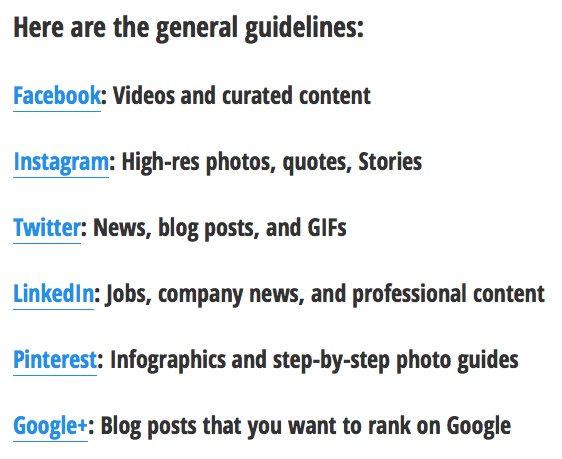
Now, for those of you folks who haven’t clicked on the original Buffer Social’s post above, that list included these general guidelines:

My ” post it where ” version looks more like this:

Facebook: [Personal/Family/Friends] Primary Account:  Videos and curated content

Facebook Business Page: Cross-posted content from your blog (or serving as a blog), videos and curated content.

Note: recently Facebook also added Jobs and it’s “Live” stream feeds. (Which is the place you should actually put your business or group program. They go on the “page” or “groups” and not as the formal Facebook page which is geared to the “person”. You can always lock down the primary account so no one sees it if you only want to focus on the Page.): 

Instagram: High-res photos, quotes, Stories. Videos up to 60 seconds and GIFS

Twitter: News, blog posts, video (512MB file size and up to 30 seconds long), GIFs and interactive features like Twitter chats. They also updated the notifications tab and several other features. Here is a good read on that from SmartInsights.com

LinkedIn: Jobs, company news, and professional content; this is important – “Content” shared needs to be insightful, useful and illustrates your expertise or those you see as influencers. You can post a video on LinkedIn but it needs to be the URL link from an outside service such as Youtube or Vimeo (or from your branded server).

Pinterest: Infographics and step-by-step photo guides, “How to” and “Top 5” type visuals do really well on Pinterest. For instance, the image I used for the Preventing Burnout post is a good example.

Google+: Cross-posted content from your blog (or serving as a blog), videos and image-based content. Blog posts that you want to rank on Google.  And for those naysayers out there about using Google+, check out 5 Surprising Reasons To Reconsider Google+ (That You Can Act On Today)

A few last notes:

For those of you who ask about what “memes” are; I found this great quote from 2015; “GIFs and Memes, quick hint: GIFs typically take clips from movies or television shows where as memes make a topical or culture reference. Or, to be more specific: GIFs always do. Memes are typically static” and think they explain it pretty well.


Oh and by the way, if you haven’t yet, check out Buffer Social’s recent post from 9/26/2017 on The Ideal Cover Photo Size for Each of the Major Social Media Platforms.

SaveSaveSaveSave

Recognition is as important as integrity

Posted September 21, 2017 By Frank Strona

It doesn’t matter how seasoned a professional you are, or how much respect or national acclaim one gets; sometimes the most important recognition is from those that you are surrounded by or work with on a day-to-day basis.

Yet that can often be the same feedback that we allow ourselves to easily overlook. That old saying familiarity breeds contempt takes on new meaning when friends and close colleagues give us compliments and recognition.  It’s much easier to blow the words off when it’s from people we know. Perhaps it’s because we expect our friends and close colleagues to say them. Maybe there is a sense of “it’s not valid” unless it’s a stranger recognizing me. It is hard to say.

But in a world when criticisms, intolerance, lack of integrity, and hate is so abundant. It is crucial that we as a people, as professionals, and as human beings learn to allow those that we respect to share their feelings of love, admiration, and appreciation. Those moments have value to us and to them. The time it takes someone to mention or write you is an expression of sentiment, but also time. It is another opportunity to reflect on who we are and what we bring to the table.

Last week, I had a lovely reminder of this when longtime friend and colleague David Ortmann posted these words in reference to my work here in MentorSF

“MentorSF is really one-stop shopping for improving or growing any facet of your life. I must give a shout out to a man doing some amazing education, coaching, writing and life-focusing work in San Francisco. I have worked with, and learned from, Frank Strona, the founder of MentorSF for years. Check out the video if there are things in your life that need polishing or retooling. I highly recommend Frank. He’s a revolutionary thinker and guide.”

Every day, every one of us. no matter career role come into contact with an abundance of people and personalities. We often speak without thinking, think without speaking and sometimes we do neither. The biggest challenge we face is that we sometimes aren’t “hearing” what we’re “listening” too.

Next time you’re in a conversation and you find yourself thinking about the next thing to say or what to buy for dinner.  STOP for a moment and really hear what the person is saying. You may find yourself on the receiving end of a complement, a genuine heartfelt sentiment, a constructive criticism that could be of benefit you personally or professionally, or just a random moment that becomes an “AHA” moment for you.

 

On the flipside of that we often also ignore the power that we have in what we say. That casual stray coment or critical observation or even an honest reaction that to a listener or the person who overhears it may have lasting effects. These effects are ones you may never aware of. It’s important to honor to remember that the power of voice and storytelling is a gift for potential and gain, but also yields a sharp edge when handled badly.


SaveSave

App regret, do you have ever get it?

You know the script; catchy advert plus flashy visual, toss in the use of the word “free” all  entice us to explore some new app to be a solution to some percieved need we have to gain time, fill space, have fun or market something. Then we go to use it and it happens; app regret.

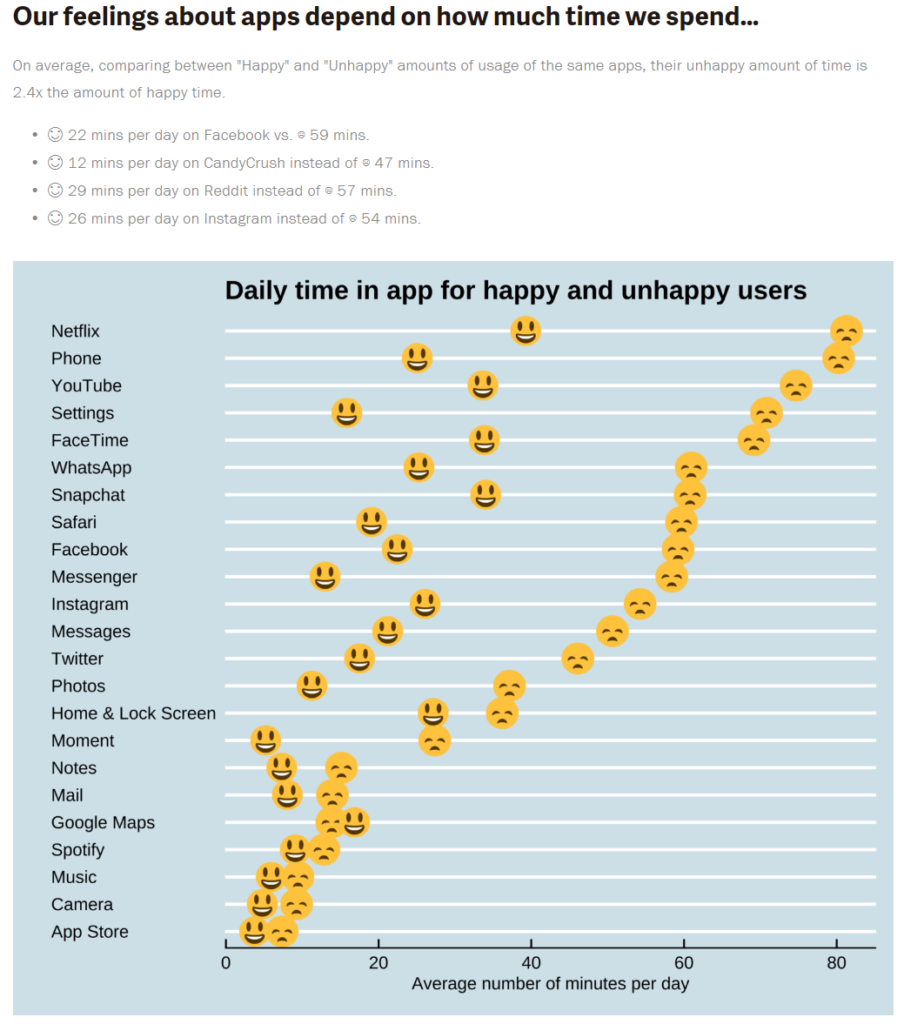
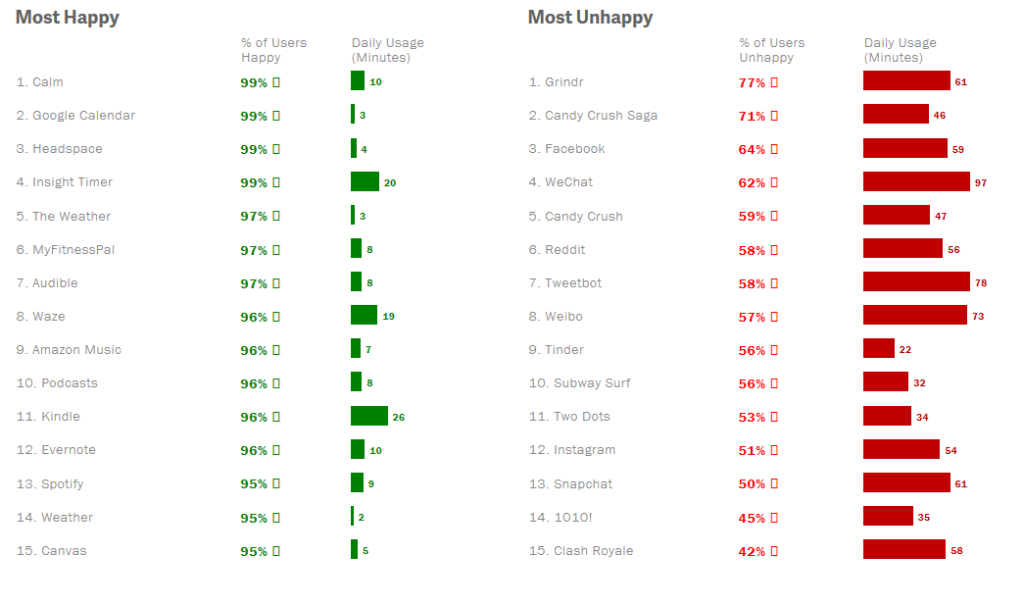
I happen to come across this post post the other night on TimeWellSpent and thought it an interesting read. It looked at “time spent online on apps” versus “happiness with the apps”. All too often we are seeing more and more “pitched” messaging about people spending too much time online, or “face in the phone”.

I can’t say I haven’t said or done the same. But I am becoming more conscious of how often I do have my “face in the phone” and missing life in the moment. My own storytelling is rich and complex, so missing out on more to add to it is something I always seek to avoid. It is odd because as amataur photographer, self-taught by my grandfather, I remember him always having his face in the camera “capturing those moments” but also missing out on both being in them and in the moment. Yet,  here I am as an adult, and I find myself doing the same things. Knowing that I do this, I try not to stress so much about the amount of time spent. Rather, what I have been looking at is the quality of the time I spend on the apps.

What is my time worth as balanced with what I am looking to achieve with the an app.

Lately I find I am deleting apps more often then ever before. Perhaps it is a growing sense of dissatisfication with the quality of the design or usability; perhaps it is the “free” concept being saddled with an overwhelming number of pop-up ads interfering with the reason I selected the app. In some cases, it is simply regret, in that in the use of them, it is not doing anything for me as a person. No matter the cause – I think with so many new apps in development, and many of us always on the search for the perfect app to do “x”. We must ensure that not only does the usability and quality meet some sense of acceptability – we need to check in on how they make us feel while using them. Going to the trouble to download, pay (or not) an app, then getting aggrivated because of its quirky or wonky design, lack of function or simply poor intuitive instructions is not going to improve my day.

The writers at TimeWellSpent, whose tagline this morning was right on the nose “Let’s demand technology that serves us, not advertising” may be on to something. I was pleasantly surprised to find that TimeWellSpent is actually a Bay Area company – so look forward to reading more about what seems like a growing share mindset from them

They partnered with Moment; an app that “that helps people track their screen time, to ask how much screen time in apps left people feeling happy, and how much time left them in regret“. It has selection bias but I think it offers us a another potential way to think about  when talking to users of apps.

The images below are screen shot that I took from the story., but I encourage you to take moment to read the brief but full story here: http://www.timewellspent.io/app-ratings/


SaveSave