
Author Archive

7 Habits vs Realities of Happy Employees

Posted April 8, 2015 By Frank Strona

Recently was shared this story; Happy employees share certain habits and behaviors, and these habits help them stay happy. Here are some of the most important ones.

Of which I am about 80% on board with. What I felt was missing was the “under-actions” that often accompany this type of commentary for the real time person;  for the full article visit: http://www.inc.com/jayson-demers/7-habits-of-happy-employees.html

1. They see problems as opportunities. 

But this also means that when they propose solutions –a process is in place in the workforce that allows for them to have fair and access to expressing theme for serious consideration.

2. They express gratitude. 

Gratitude is one thing – but even the more gracious and appreciative worker will lose it if they feel locked or forced into a corner without the tools to adapt and move towards the “gratitude light’

3. They stay busy, but not overwhelmed. 

Busy? The new norm – You have to know the difference between them and have the support in place to be mentored on how to use this skill.

4. They socialize. 

This is the current buzz word in HR and Workforce development – This push to query “do you have friends at work”, how social etc.. It has value I agree. But it needs to be nurtured in an organic way. Not everyone wants or comes to work fitting in.

5. They take breaks. 

I agree with this – enough said

6. They stay honest. 

Honesty is over rated if it means you loose out becouse of institutional disreagurd for honesty and feedback. More and more “change leaders” use the jargon and don’t get the application. This is usually clearly shown in how they purposely never survey the workforce for honestly, confidence on themselves, etc. Instead push it on the systems they forced on the teams.

7. They accept what can’t be changed. Some things are simply beyond your control. You can’t help the demanding client who needs everything done by yesterday. You can’t help the fact that your boss rarely gives you the full plan in advance. Unhappy people see these things and dwell on them perpetually, constantly trying to fix them or staying angry that they exist. Happy people, on the other hand, learn to live with the idiosyncrasies of others, accepting that quirks and personality traits can’t always be changed–and that’s not always a bad thing.

Live and let live is a great approach – But to do this – you have to feel good about your place in the structure of work; how you see your role in the moment and its relation to yourself.  So – before you can accept what can’t be changed – an honest assessment and query to yourself; that includes an understanding of “what I can change is my ability to leave what isn’t feeding my needs or skills” needs to happen.


The 3M+DI’s of Social Media

Posted April 1, 2015 By Frank Strona

Nice simple article that really looks said some of the better reminders for social marketing. 

The 4 M’s of Social Media

 I’m not a big advocate for number four; Monetize.  I do understand the value of developing social marketing techniques that bring in income-  if that’s what you’re aim is. So this might be 3M’s +DI; for me with my fourth bullet being dissemination information. 


Social-media marketing used to be a two-step process: write and post. But today it has evolved into something that sometimes looks more like a NASA mission-control center operation. Dozens of software systems and screens monitoring, measuring and optimizing each campaign. 

But beneath all the complexities, the fundamentals of social-media marketing ultimately determine the outcome of campaigns. When marketers master the four Ms of social marketing, all the complexity amid a sea of tools and tactics can be distilled into a simple, successful game plan. 

1. Monitor.

Social media is an increasingly crowded and busy arena. The downside is that manually monitoring social-media efforts is time-consuming, if not impossible. But the upside is that when a company uses a platform that can track and analyze social media chatter, it can tap into real-time intelligence about an industry and its competitors that will sharpen its strategy.

Monitor activity before you launch a campaign. Obtain a clear idea of a competitor’s strengths and weaknesses on social media. Look for market opportunities and see what consumers react to within the industry. Make social media your real-time A/B testing and market-research laboratory. And then monitor campaigns to optimize performance. 

2. Manage.

Once a campaign is launched in the social sphere, management can make or break the campaign’s success. Refine your campaign by tracking performance and reacting to what works and what does not. Take the workload off your social-media manager by letting him or her schedule posts and tweets. Add a new level of social-media intelligence by listening to what users are saying about the company’s campaigns and brand.

Management is the execution of the social strategy. And with all the emphasis on the software, analytics and strategy, execution is still what drives the success of a social-media campaign.

3. Measure.

Measurement is increasingly important on two fronts. Social media is fragmented across multiple platforms. Tracking and analyzing the full scope of social-media use is now more difficult than ever. Secondly, measurement is one of the most important ways to demonstrate the effectiveness of social marketing to chief marketing officerss, company executives and board members.

Measurement involves tracking results on earned, owned and paid media. Engagement can be gauged across all social-media platforms and how traffic is driven to a company’s website. It’s also possible to analyze how paid advertising on Twitter and Facebook encourages participation on social-media campaigns and a company’s website. 

4. Monetize.

The Holy Grail of social media marketing is sales. When marketers can draw a direct line between a social-media campaign and sales, all the guessing over the value of engagement ends. The return on investment is indisputable.

A rapid advance in technology is making social-media sales increasingly within reach of businesses of all sizes. Transactions can be made through use of a hashtag. Facebook is launching a “Buy” button that lets users purchase items without leaving its platform. And new social-commerce capabilities empower marketers to drive sales on social media.

Closing a sale can be tricky on social media. Consumers often seek an incentive, a prize or promotion. They also look for what their friends and acquaintances are wearing or purchasing. Such habits let brands leverage the viral, sharing nature of social media to inspire purchasing decisions with user-generated content or through coupons, discounts or prizes.  

Public Narratives

Posted March 18, 2015 By Frank Strona
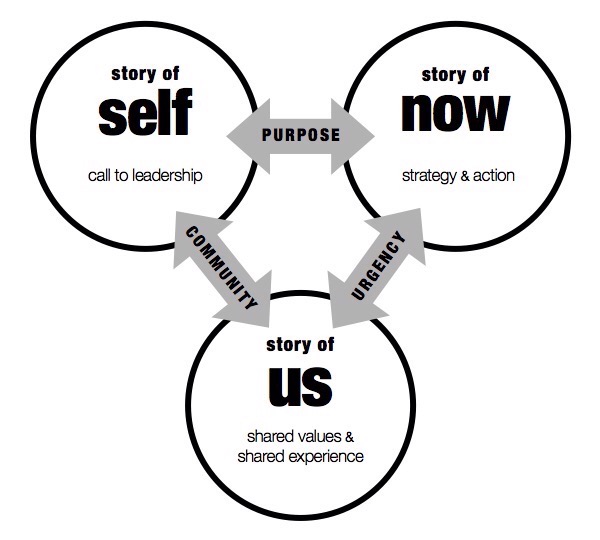
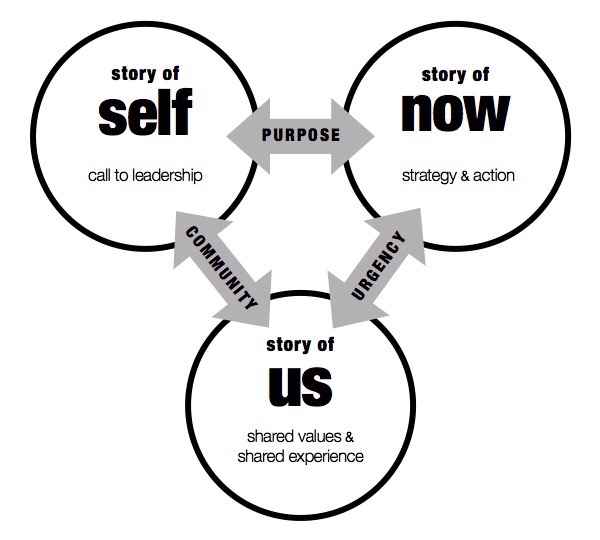
A great way to think about the role your visual collateral has for telling and sharing the narratives you or your partners hold 
Public Narrative: How To Share Your Story To Inspire Others To Act – Josh Daneshforooz

http://ow.ly/KnXjO


Monday morning reflections

Posted March 16, 2015 By Frank Strona

Caught my eye while reading Joseph Conrad’s Heart Of Darkness this am. The quote offered a powerful message often lost in many a corporate and transitional change leadership process on workforce motivation.

While some may debate the value of having a “passion” in a personal career path – I don’t believe the importance of self-gratification can ever be stressed enough. 

 “I don’t like work–no man does–but I like what is in the work–the chance to find yourself. Your own reality–for yourself not for others–what no other man can ever know. They can only see the mere show, and never can tell what it really means.” 

― Joseph Conrad, Heart of Darkness


SaveSave

Three Ways to Coach the Person, Not the Problem

Posted March 3, 2015 By Frank Strona

Got this from one of the lists I read – thought worth sharing.

http://m.govexec.com/excellence/executive-coach/2015/03/three-ways-coach-person-not-problem/106398/?oref=eig_online_nl

Back when we were co-teaching The Flow of Coaching module at the Georgetown Leadership Coaching Program, my good friend, hero and fellow Davidson College alum Frank Ball used to do a funny bit with a bottle of water. To make the point that coaches and leaders should coach people and not problems, Frank would put a bottle of water on the table in the front of the room and say, “This bottle of water represents the problem.” Then he would start coaching the bottle of water. Needless to say, he never got very far. The bottle just didn’t have that many insights on what to change or how to change it.

That’s the thing. People have insights, problems don’t. If you’re a leader who cares about growing and developing your people, you have to coach them, not their problems.

That’s counterintuitive for a lot of leaders and even a lot of professional coaches. The solution to the problem is so obvious (to you) that you just want to jump in there and solve it for them.  That’s not coaching; that’s providing the answer. There’s not much growth in that approach. In fact, you might set growth back by creating a dependency that locks both of you into doing what you’ve always done. And of course when you do that, you’re going to get what you’ve always gotten.

So, the next time you feel the urge to coach the problem, try one or more of these three ways to coach the person and not the problem.

Ask Questions with the Word “You” in Them:  Questions that have “you” in them put the focus on the person, not the problem. They cause people to think and reflect. Examples include:

  • What are you trying to accomplish?
  • What’s important about that to you?
  • What have you tried so far?
  • What’s got you stuck?
  • What else could you do?
  • What would you need to do that?
  • What are the next few steps you could take to move things forward?

Spend Regular Time on Non-Agenda Talk:  This is also known as getting to know the other person. If every conversation you have with the other person is driven by an agenda or focused on solving a problem, that’s all you’re going to talk about. You’ll miss the opportunity to learn more about what’s important to that person, what they’re passionate about, what they love, what they hate. Create and leave time to just talk and connect every now and then.

Focus on What, Not How:  Chances are you got where you are in your career because somewhere along the way, a boss gave you a big, hairy problem to solve and more or less got out of your way. They were there to support you in a pinch or act as a sounding board but they weren’t beside you every step of the way saying, “Here’s how you do the next thing and the next thing and the next thing.” They were clear on what needed to be done, but gave you the space on figuring out how to do it. They focused their time and attention on you and let you solve the problem. Now it’s your turn to pay it forward.

(Image via URALSKIY IVAN / Shutterstock.com)

Success when you don’t fit a box

Posted March 3, 2015 By Frank Strona

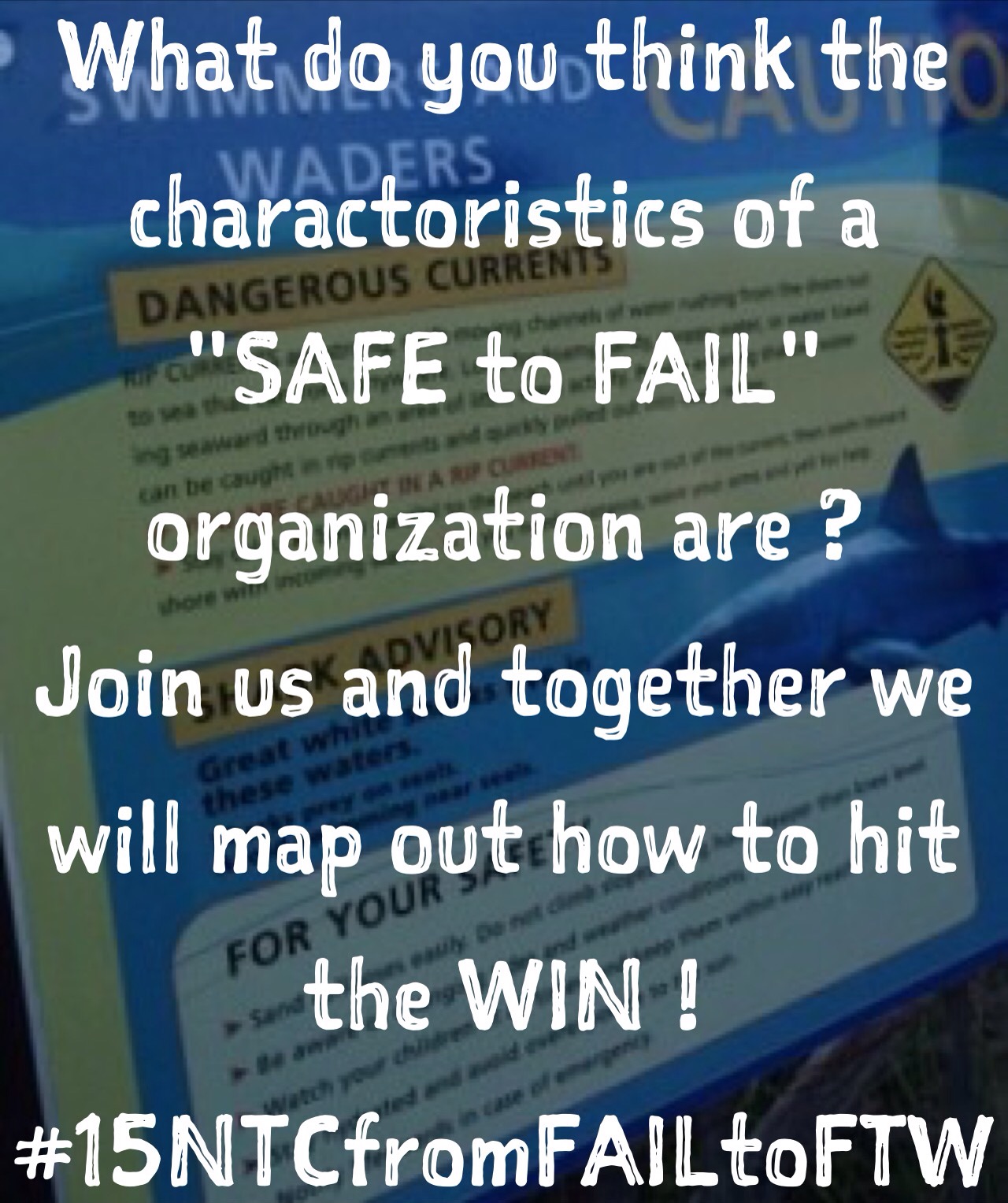
Another way to see a “fail”  that can be a “win” #FTW for #15NTCFromFAILtoFTW to build on. 

Really found this a tellng read

How to ‘Get into Tech’ If You’re Not an Obvious Fit @kvox 

http://ht.ly/3xqH8J 


Active Engagement feeds a WIN!

Posted March 2, 2015 By Frank Strona

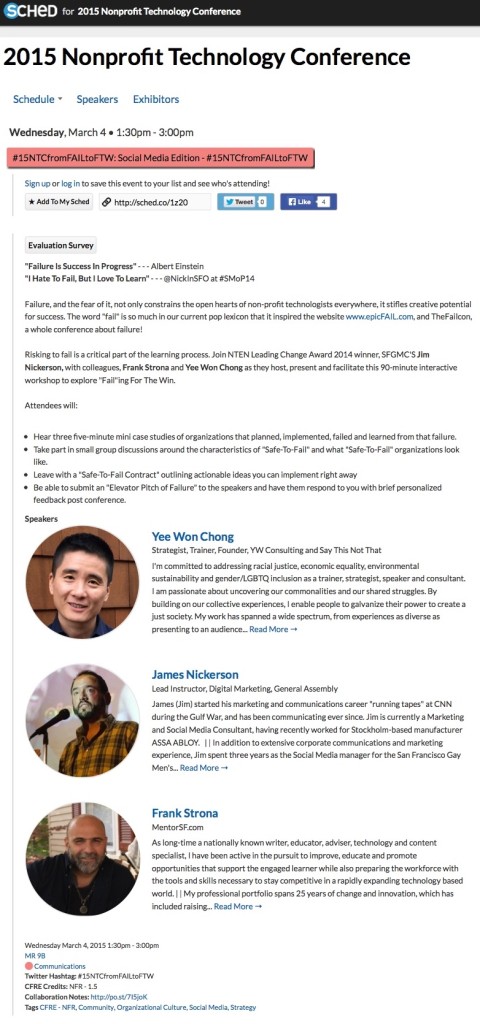
Our #15ntcfromfailtoFTW at #15NTC isnt just talking heads. Take part in engaged sharing w/ @NickInSFO and @yeewon

Check out the workshop here:

http://15ntc.sched.org/mobile/#session:48448638c617c45e392d12c8a7f72d30


A pal turned me on to this training;

FAVAR™ Pro is designed for LI profile writers to help their clients be found, considered and contacted by 1000s of users of Recruiter Corporate.

Product Description

Companies will spend well over $1.5B in 2015 using LinkedIn to recruit top talent.  1000s of leading employers use LinkedIn’s flagship recruiting product, “Recruiter Corporate”.  Recruiter Corporate is extremely complex and different from all other LinkedIn accounts – and very little is known about it.
In this ground-breaking two-hour webinar you will learn the functionality, nuances and dysfunctionality of Recruiter Corporate; while gaining an understanding of how to create profiles so that your clients gain a competitive advantage as they are found, considered and contacted by users of Recruiter Corporate.


You will learn:

  • The “5 Keys to LinkedIn Findability”
  • The one key field that can help your clients in every step of the recruiting process!
  • A simple tactic that will help your clients leap to the front of the line!
  • Much, much more!

You will also receive:

  • ON-DEMAND access to updated versions of FAVAR™ for THREE FULL YEARS!
  • A free listing in our LinkedIn Profile Writers directory!
  • Access to our live, or recorded Q&A sessions!
  • Bonus: Order now and receive MyRecruiterRank™ at no additional cost!  The proof you want!

We will keep you in the know when it comes to creating LinkedIn profiles for maximum results!

#15NTCfromFAILtoFTW: Social Media Edition Here We Com

Posted February 21, 2015 By Frank Strona

Getting ready for our big presentation that engages the thinking that to win, you must try and to try, you must fail to win!

http://15ntc.sched.org/event/48448638c617c45e392d12c8a7f72d30#.VOkSJ0J5-rZ

2015NTENFail

Harness the power of internet media for nonprofits

Posted January 30, 2015 By Frank Strona

Originally shared via Nonprofit Tech for Good mailing list in 2014.  Social & Mobile Media Service for Nonprofits

(fyi – cut & pasted – not my original work but so worth sharing)

Why YouTube and Video?

Introduction to YouTube:

  • Over one billion unique users visit YouTube each month.
  • 100 million people take a social action on YouTube (likes, shares, comments, etc.) every week.
  • Forty percent of YouTube traffic occurs on mobile devices.

HOW TO: Set-up and Design a YouTube Channel:

Get Inspired:

  • Subscribe to the Nonprofit Video Awards.
  • Subscribe to large nonprofits similar to yours in mission and programs. Note that the channels you subscribe to are featured in the YouTube homepage.
  • Sign up for the WITNESS Toolkit.

HOW TO: Create Videos for Your Nonprofit:

OPTION 1: Create Your Own Videos

OPTION 2: Use Animoto

Animoto automatically produces video slideshows from your photos, video clips and music. It’s free and easy. Premium fees waved for nonprofits via Animoto for a Cause.

OPTION 3: Get a Volunteer

Tap into local universities and colleges! Contact their Career Centers and let them know that you want to hire student interns to produce videos for your nonprofit. Ask for film, art and marketing majors that are looking to build their portfolios.

YouTube’s Nonprofit Program:

YouTube Best Practices:

  • Maximize your YouTube SEO using video tags and video titles.
  • You may want to include the name of your organization in video titles, such as WildAid.
  • Add YouTube icons to your website and blog. (View Nonprofit Tech for Good)
  • Insert screenshots of videos into your e-newsletter and link to your website or blog.
  • Then, of course, share your videos on social media and embed them into your website and blog.
  • Nonprofit Videos that went viral: Follow the Frog, It’s time

Instagram and Vine

Thank You

The Public Interest Registry – the nonprofit that manages the .ORG domain – will be launching the .NGO and .ONG domains in the fall of 2014. Unlike the .ORG domain, .NGO and .ONG will only be made available to validated NGOs, nonprofits, and charities worldwide. To learn more and express your interest in your first choice of the .NGO and .ONG domains, please visit globalngo.org.